Authors: Lai Wei, Kenny K. N. Chow Status: Published, MoMM 2022 (Springer LNCS)
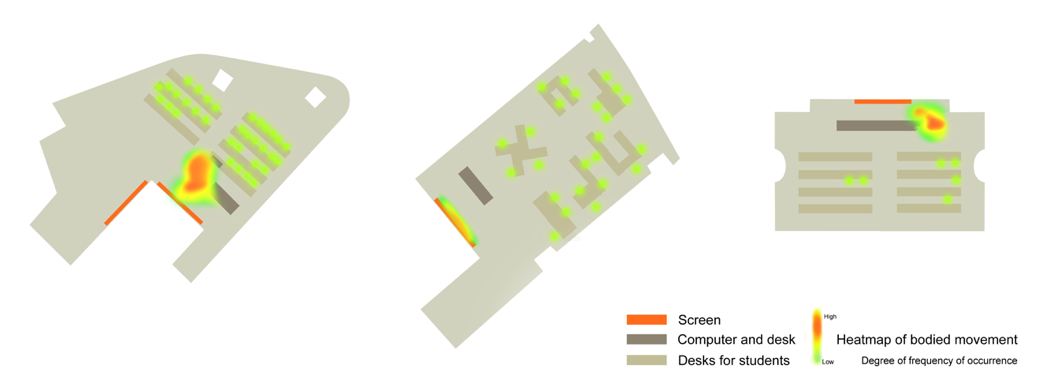
Figure 1. A heatmap of lecturers’ and students’ bodied movements in offline lecture setting (left), online lecture setting (middle), and hybrid lecture setting (right).
Abstract
Researchers who study pedagogical space mostly look at physical space, such as the density of space usage and education-related material designs. The interaction of objects and the resulting network in the physical space, referred to as a secondary pedagogical spatiality, have received less attention. In a classroom setting, objects may refer to the lecturers and students. This study examines the representations of their body movements corresponding with concurrent verbal language, seat layout, and instructional equipment. We further examine the objects’ movements and how they relate to the physical spaces and understand the process of interactions in the physical spaces. The findings, which support the Actor-Network Theory concerning the connectedness and fluidity of objects in physical places, help move toward a theory of pedagogical network.
Paper: Who Shapes the Network of a Pedagogical Space? Clues from the Movements in the Physical Places
DOI: 10.1007/978-3-031-20436-4_14
Keywords: Network space, Pedagogy, Actor-network theory, Multimodality, Bodied movement.
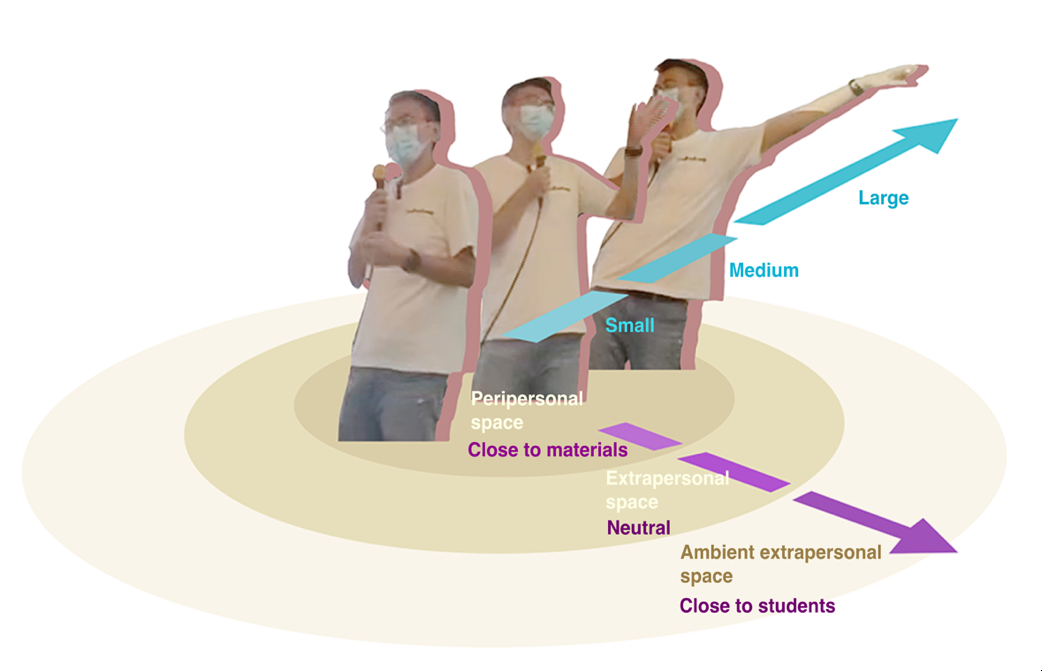
Figure 2. A spatial relation diagram of multimodal sources in lecturers’ space.